
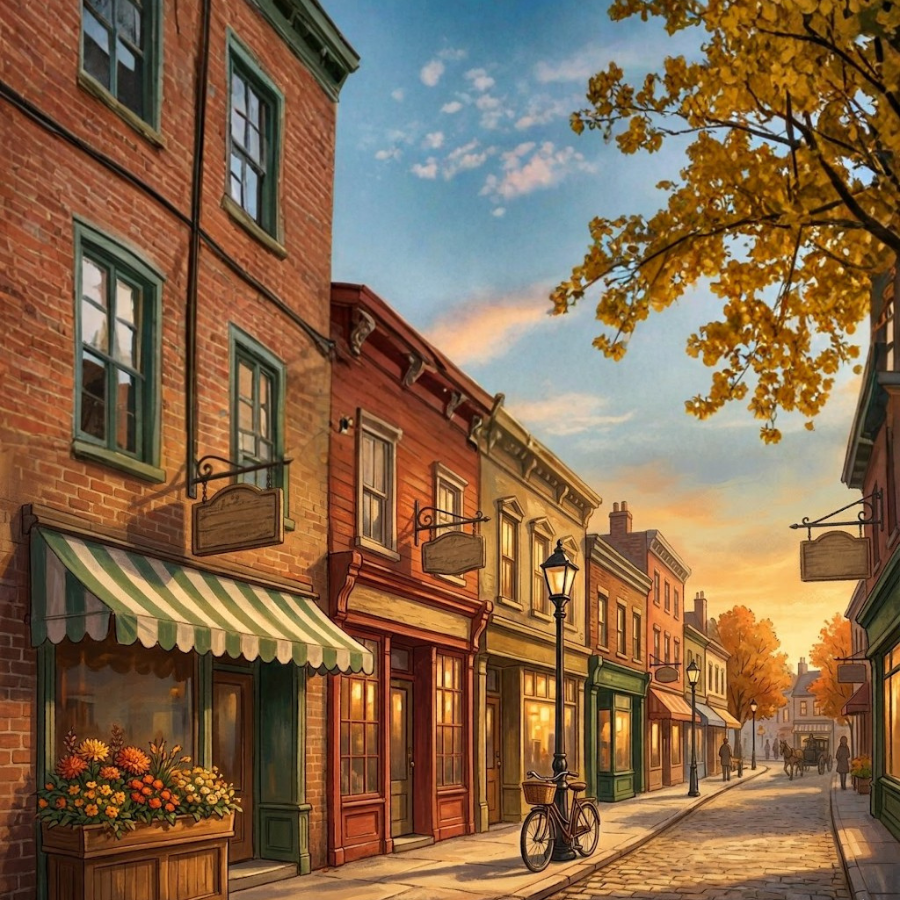
In a cozy mystery, the setting isn’t just scenery. It’s more like one of the characters and it’s usually the nosiest one in the book.
I’ve been working on a series called Wiregrass Roots, set in a small South Alabama town, and the longer I work on it the more convinced I am that the town itself is doing half the detective work. A good small town has opinions. It has a memory longer than any one resident. It notices when your porch light has been off three nights running, and it has thoughts about it.
So how do you write a place that feels alive instead of like a postcard? A few things I keep coming back to.
Specifics beat scenery
“A charming small town with friendly people” is not a setting. It’s a brochure. What makes a place real is the oddly specific detail that could only be true here: the monument to a bug in the town square, the diner that stops serving breakfast when the cook’s stories run out and not on any specific time, the church sign that has been misspelled so long nobody fixes it on purpose anymore.
One concrete, slightly strange detail does more work than three paragraphs of “quaint.”
Let the town have manners — and grudges
The best small towns are a little contradictory. Mine is unfailingly polite and absolutely merciless. People will bring you a casserole the day of a death and dissect the funeral the day after, and they will not see any conflict between those two things. That tension is gold for a mystery, because it means everyone is both kind and a suspect. 
Population through one well-drawn neighbor
You don’t establish a town by naming forty residents. You do it through one person who clearly belongs to it. When a character talks to her 2009 Buick like it owes her money and irons clothes nobody will ever see, you don’t just meet her, you meet the kind of town that produces her. One vivid local implies a hundred more offstage.
The test
Here is the question I ask on revision: if I lifted this scene and dropped it into a generic Anytown, would anything be lost? If the answer is no, my setting isn’t pulling its weight yet. A real place leaves fingerprints on the plot. It should be impossible to move the story somewhere else without breaking it.
Get the town right and it will start handing you clues, suspects, and motives for free. That is the whole reason cozy readers keep coming back, not just to solve the mystery, but to go home.