
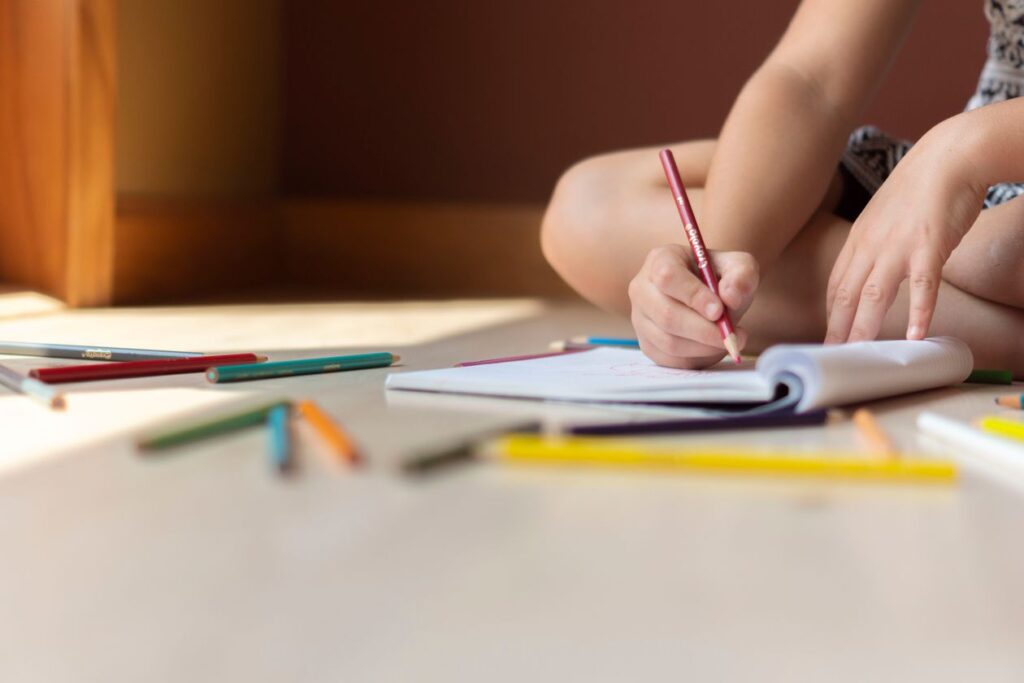
School let out, the backpack hit the floor, and your child has no plans to touch a pencil until August. Sound familiar? Here’s the good news: summer writing activities for kids don’t have to look anything like school. No worksheets, no red pen, no timer ticking on the kitchen counter. The best summer writing happens on postcards and sidewalks and grocery lists taped to the refrigerator. I taught for more than twenty-five years, and the kids who came back strong in the fall were never the ones who slogged through packets all June. They were the ones who kept writing without ever noticing they were writing. That’s the whole trick, y’all, and this post will hand it to you, one easy idea at a time.
Why a Little Summer Writing Goes a Long Way
Teachers have a name for what happens between June and August: the summer slide. Kids who don’t read or write much over the break lose ground, and researchers at the Brookings Institution have found that students can give back a meaningful chunk of their school-year gains over a single summer. Reading gets most of the attention, and organizations like Reading Rockets have written plenty about summer reading loss. Writing quietly slips even further, because almost nobody practices it once the last bell rings.
I watched this play out every August of my teaching career. You can tell by the second week of school which kids spent the summer with words and which ones didn’t, and it has nothing to do with flashcards. The summer writers settle into the year like they never left.
Here’s what I want you to hear, though. The fix is small. Ten minutes of real writing a few times a week will hold the line just fine. Your child does not need a summer curriculum. She needs a reason to put words on paper that has nothing to do with a grade.
And be generous about what counts. A comic strip counts. A thank-you note counts. Texted directions to the cousins about where to meet at the pool count. Captions under vacation photos count. The skill being protected here is the habit of putting thoughts into written words, and that habit doesn’t care one bit whether the words land in a workbook or on a popsicle-stick sign for the tomato plants.
That distinction matters more than parents expect. A worksheet says this is school, and school is over, so every line becomes a negotiation. A postcard to her cousin says this is life, and life is interesting. Same pencil, same sentences, completely different fight. Or rather, no fight at all.
So before we get to the activities, let go of two things. Let go of correcting spelling in June. A misspelled word on a sidewalk hurts nobody, and nothing kills a young writer’s nerve faster than an adult with a mental red pen. And let go of length. Three honest sentences about a firefly beat a forced page about My Summer So Far every single time. Keep those two promises and the rest of this gets easy.
Give Writing a Real Job to Do
The fastest way to get a child writing in the summer is to make the writing useful. Kids can smell busywork from across the yard, but hand them a task where the words actually do something, and they forget to resist.
Put your child in charge of the grocery list this week. All of it: walking the pantry, asking everybody what they need, writing it out, and checking items off at the store. That’s planning, spelling, and audience awareness disguised as an errand.
Or start the season with a summer bucket list, written by the kids themselves. Not your list in your handwriting, theirs. Catch a frog, sleep in the tent, learn to dive, eat a peach over the sink. Hang it somewhere public and let them add to it and cross things off all season. A list a child writes herself gets read twenty times more than anything an adult writes for her.
Postcards work the same magic. Buy a stack of cheap ones, or let your kids make their own from index cards, and set up a summer pen-pal loop with grandparents or a school friend who moved away. A postcard is the perfect length for a reluctant writer. Three sentences, done, and then the mailbox turns writing into something that comes back.
If your child heads to camp, tuck pre-addressed envelopes into the duffel bag. If a vacation is coming, let her write the packing list or plan one day of the trip, with her itinerary getting an honest shot at being followed. Backyard lemonade stand? Somebody has to write the signs and price list, and it should not be you.
One more favorite from my teaching years: the family restaurant night. Once a week, a kid plays chef and writes the menu. Real menu, real choices, fancy descriptions encouraged. Tuesday’s grilled cheese becomes Golden Toasted Cheddar Melt on Country White, and suddenly a seven-year-old is workshopping adjectives at the kitchen counter of her own free will.
None of this looks like writing practice, which is exactly the point. I shared more ideas like these in my post on easy ways to encourage your child to write at home, and every one of them works double-duty in the summer.
Summer Writing Activities for Kids Who’d Rather Be Outside
Some kids will sit at the kitchen table with a notebook and be perfectly content. Mine were not those kids, and maybe yours aren’t either. Good news: the best summer writing activities for kids who can’t sit still don’t require a table, and some don’t even require paper.
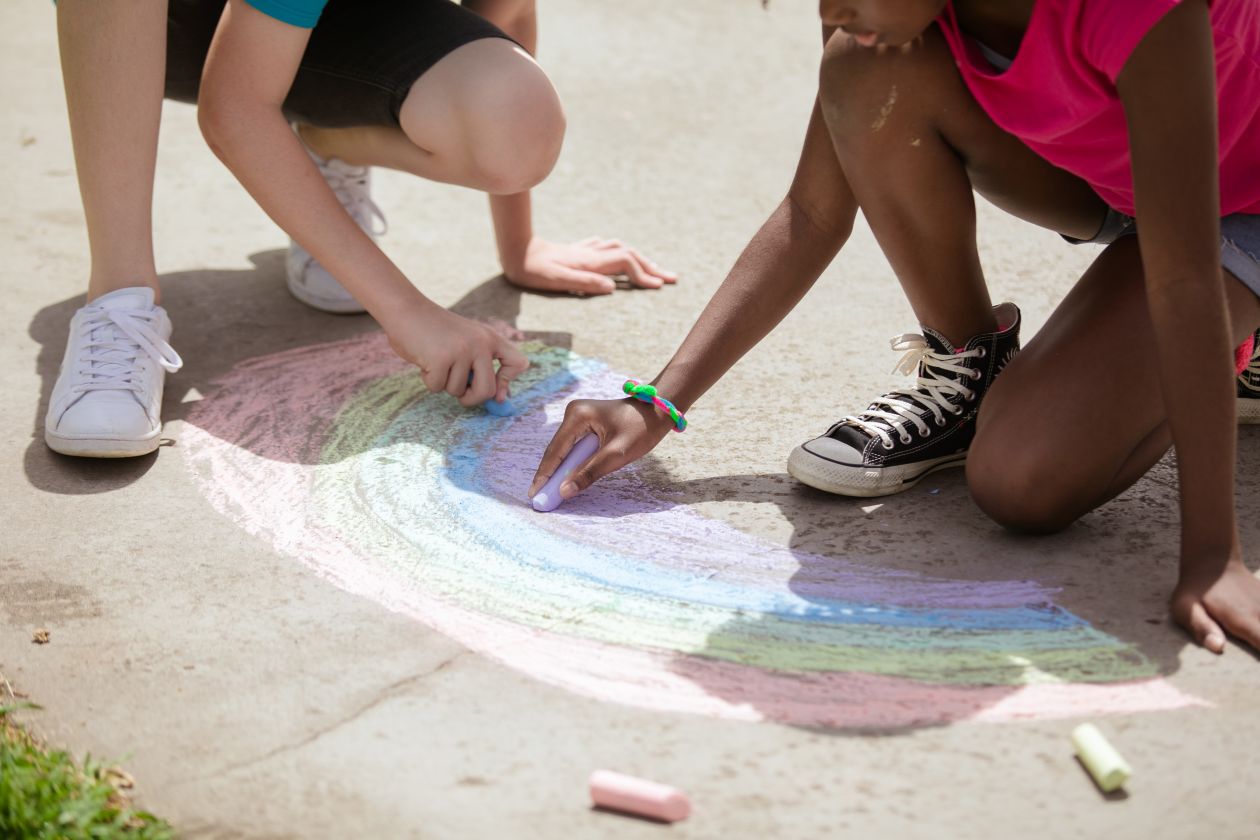
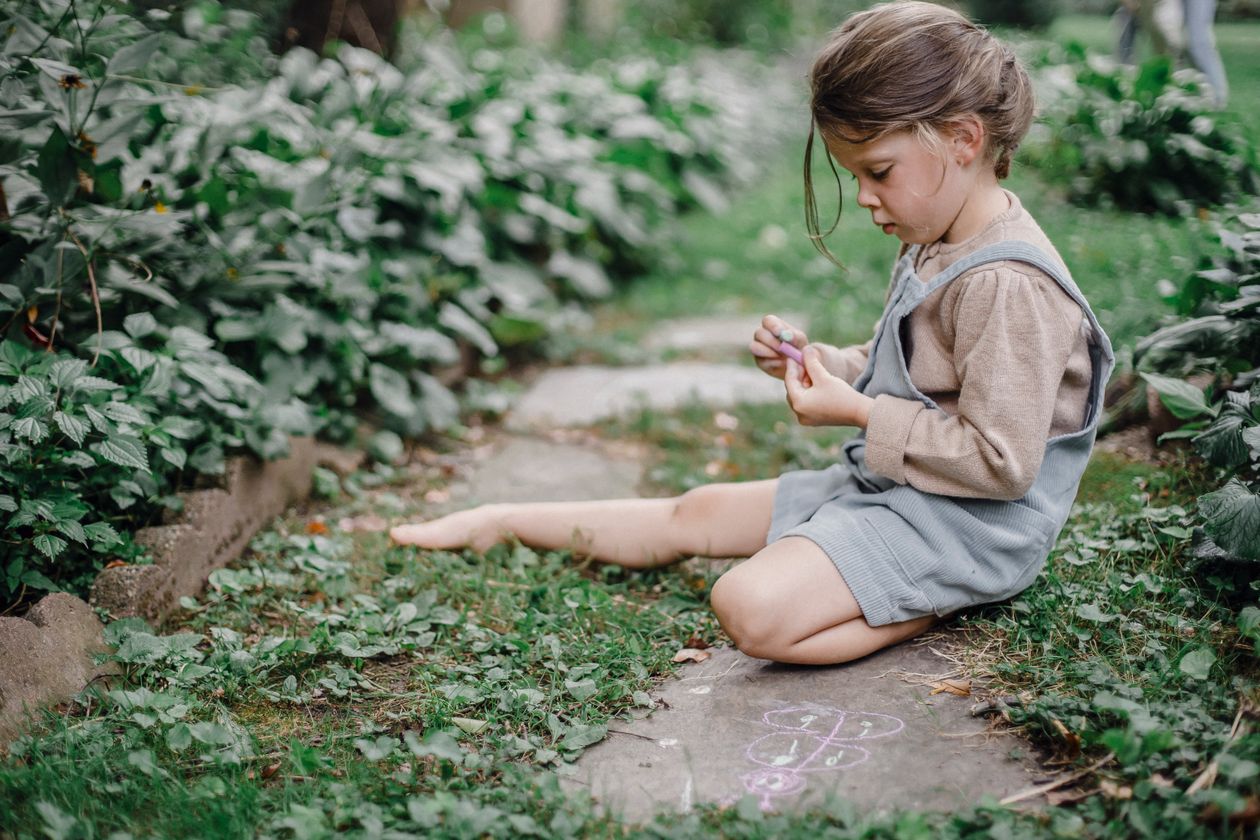
Sidewalk chalk is the most underrated writing tool in America. A two-dollar bucket of it buys more willing sentences than any workbook on the shelf. Word of the day in foot-tall letters. A chalk story trail down the driveway, one sentence per square, that ends in a surprise. Jokes for the mail carrier. A child who writes on concrete in pink and blue does not think of herself as practicing, but she’s choosing words and building sentences all the same.
A story jar earns its keep on porch evenings. Drop slips of paper with openers inside (the dog learned to talk, the ice cream truck never stopped coming, something in the garden glowed) and pull one out after supper. Whoever draws it starts the story out loud, and anybody who wants to can write their favorite version down later.
Walks count too. On the next trip around the block or down a trail, play the noticing game. Everybody collects three things worth remembering (a lizard doing push-ups on the fence, a mailbox shaped like a catfish, the neighbor’s sunflowers finally opening) and the family writes them on a kitchen list when you get home. By August that list reads like a poem about your own street, and nobody sat down to write a poem even once.
A summer journal works too, as long as it stays loose. Not a diary with rules. A spiral notebook that lives somewhere easy to grab, for bug sightings, vacation complaints, popsicle rankings, whatever the day offered. My journal prompts for kids post has forty starters if the page ever stares back.
If you’ve got more than one child at home, try a family newsletter. One page, once a month, with headlines. Dog Digs Third Hole This Week. Popsicle Supply Reaches Critical Low. Let the kids interview each other, report on the garden, review the new sprinkler. Grandparents make a devoted subscriber base, and a byline does something for a young writer that no gold star ever managed.
And for a rainy afternoon, my favorite of the bunch: have your child write a mini mystery. Five steps, one stolen cookie, a suspect list of family members. My detective-story activity for kids walks through the whole thing, and I’ve yet to meet a kid who could resist framing a sibling in print.
Keep It Small and Keep It Summer
You don’t need all of these. Pick one. Hand your child the grocery list this week, or a box of chalk, or a postcard with a stamp already on it, and see which one catches. When it does, feed it quietly and brag on the results where your child can hear you.
The goal isn’t a portfolio by August. It’s a kid who walks into the classroom this fall still believing words belong to her, that writing is for telling jokes and framing siblings and getting the good cereal onto the list. Summer writing activities for kids work when they don’t feel like activities at all. They feel like summer.
So tape the list to the refrigerator, put the chalk bucket by the back door, and let the misspellings bloom where they fall. School can have the red pen back in August. This season belongs to fireflies, popsicles, and three good sentences about both.