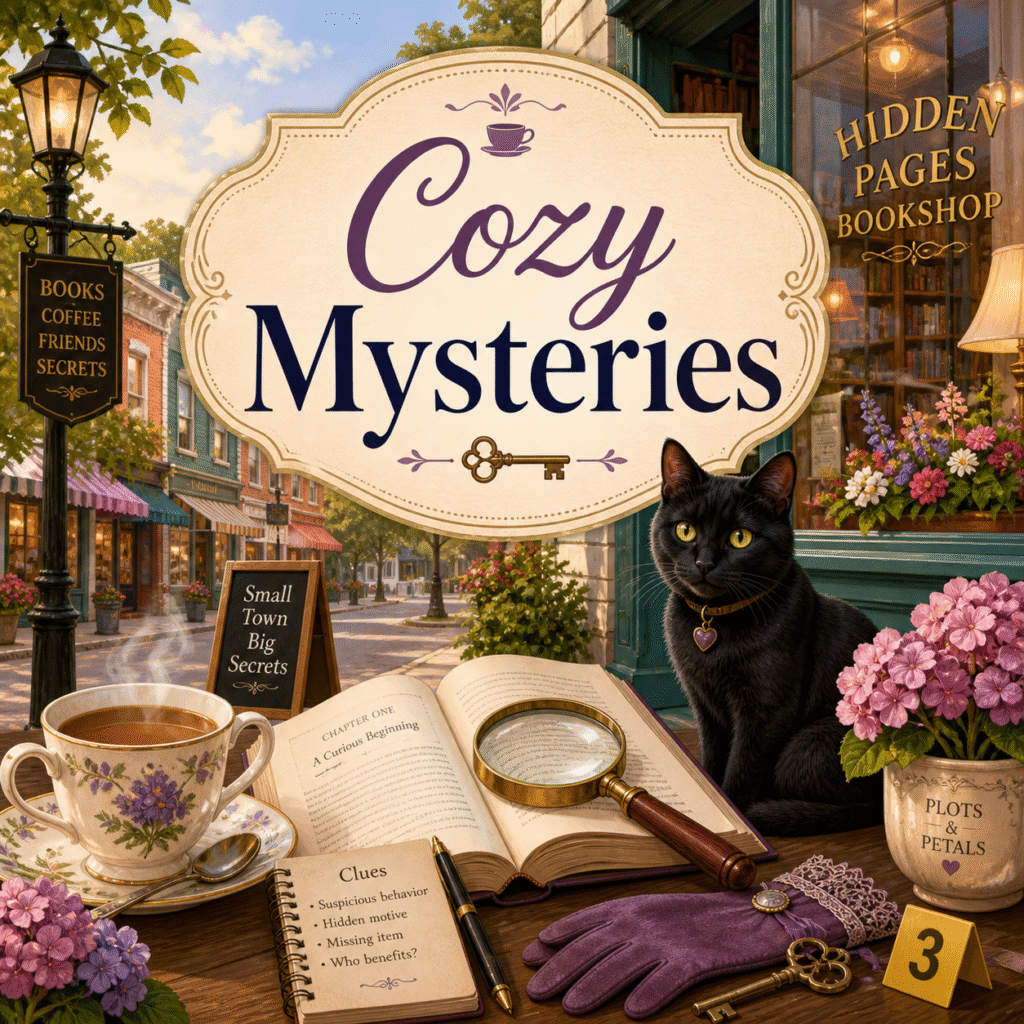

A cozy mystery opening has one job, and most debut writers get it backwards. They think the job is to set up the murder. It isn’t. The job is to make the reader fall a little in love with the sleuth, the town, and the rhythm of the place before any of that gets disturbed. Get the cozy mystery opening right, and the body can land on page thirty and the reader will already be too invested to put the book down. Get it wrong, and even the cleverest plot in the world has nowhere to grow.
I have rewritten the opening chapter of the first Wiregrass Roots book four times, and the version that finally worked is the one that almost never mentions the case at all. Here is what I learned, and what I now look for when I am revising openings for the writers I mentor.
Lead With the Sleuth, Not the Crime
The biggest temptation in a cozy mystery opening is to start with the body. A corpse in the gazebo, a scream at the church potluck, a phone call that wakes the sleuth at three in the morning. It feels urgent, and urgent feels like good writing. It is not.
Cozy readers are not picking up your book for the crime. They are picking it up to spend three hundred pages with a person they like, in a place they wish they lived. If you open with the disruption, you have skipped the part of the contract they actually signed for. They want a few pages of the sleuth being the sleuth, doing whatever ordinary thing makes her her, before her world tilts.
So start with the everyday. My favorite cozy openings tend to drop us into the sleuth midway through a small, specific act. She is arguing about pie crust with her aunt. She is rescuing a goat from a neighbor’s azalea bushes. She is correcting a tourist’s pronunciation of the town name with a smile that is somehow not quite kind. By the bottom of page one, the reader already has a sense of her tone, her opinions, the way she handles small irritations. That is the foundation everything else stands on.
Concrete, not abstract. Show her judging a casserole, not “being a perceptive person.” The judgment is the perceptiveness.

Make the Town a Character Before It Becomes a Crime Scene
A cozy mystery lives or dies on its setting, and the opening chapter is where the town earns the reader’s love. If the body shows up before the reader cares about Magnolia Bend (or Cabot Cove, or Three Pines, or wherever you have set your story), the murder is just an incident in a place she does not yet have feelings about.
The trick is to make the town visible through detail, not description. Anyone can write “the small town of Pine Hollow was charming.” That sentence is empty. What sells the town is the specific. The diner where the waitress remembers what you ordered six years ago. The library that still keeps the card catalog in a back room because Miss Eunice will not let it go. The sign at the city limit that locals know to read with one eye half-closed, because the population number has been wrong since 1998.
A cozy mystery opening that gets this right is doing two jobs at once. It is selling the town as a place worth caring about, and it is laying down the texture of relationships and grudges that will carry the whole investigation. The reader does not know yet that the diner waitress will turn out to be a witness, or that Miss Eunice’s stubbornness will hide an old debt. She just knows the place feels real. That is enough for now.
If your opening could be set in any small town in America, it is not specific enough yet. Push on the details until the town has a personality of its own. (For more on this, see my piece on writing a town that feels like a person.)
Plant the Hooks Before the Body
This is the part most writers miss. Every important element of the case should be on the page, in some innocent form, before the murder happens. The victim should have made an appearance, ideally with someone irritated at him. At least one of your eventual suspects should be visible and unremarkable. A clue that will matter later (an old photograph, a habit, a piece of geography) should be mentioned the way a sleuth would mention anything else, with no weight on it at all.
This is fair play, and it is the foundation of the whole genre. Ronald Knox wrote out his Ten Commandments of detective fiction almost a hundred years ago, and the heart of them is still the deal we make with the reader. If the answer was not knowable from the evidence on the page, the reader has been cheated. Cozy readers are particularly unforgiving about this. They came to solve it with you, not to be told.
The opening chapter is where that deal is signed in invisible ink. You are setting up the ledger of what the reader saw, so that when the sleuth puts it together two hundred pages later, the reader can look back and say, “Of course. It was right there.” That moment is the whole reward of reading a cozy.
A handy test as you revise. After you have plotted the full case, go back to your opening and ask: have I shown, in some incidental way, every piece the sleuth will eventually need? If the answer is no, you have a problem to solve before the manuscript goes any further. If the answer is yes, but every piece is hammered down with foreshadowing, you have a different problem. Each clue has to look like nothing in particular when it arrives. (For more on that balance, my post on planting red herrings without cheating walks through how to keep clues honest and still misdirecting.)

Earn the Body
Now, finally, about the body. The cozy mystery opening that works does not avoid the murder. It earns the right to drop it. By the time you put the corpse on the page, the reader should already be settled into the world, fond of the sleuth, and at least one chapter deep in the question of where this town’s tensions live.
There is no universal page count for when the body should appear. Some cozy series drop it in the prologue. Some wait until chapter three. What matters is not the timing but the feeling. The body should land in a world that already feels populated, not in an empty stage that has been waiting for it.
When the disruption comes, let it disrupt. A sleuth who barely flinches when her cousin’s husband turns up dead behind the feed store is not a sleuth, she is a plot device. The cozy can be light, but the violence still has to register. The reader needs to see your sleuth’s hands shake, or her appetite vanish, or her voice get quieter at the funeral. That moment of human response is what tells the reader the puzzle has stakes, even in a book where nobody will dwell on the gore.
After that, the investigation can begin. But it begins in a story that already had legs to stand on. That is the whole point of doing the opening chapter slowly.
The Quiet Promise You Are Making
A great cozy mystery opening makes the reader a promise. The promise has nothing to do with who did it. It is a promise that the next three hundred pages will feel like time well spent. That the town is a place she will want to visit again. That the sleuth is someone she can trust to be on the right side, even when the evidence gets ugly. That the puzzle will be fair, the company will be good, and the worst of it will not leave her feeling worse than when she opened the book.
Every line of your opening chapter is either keeping that promise or breaking it. Read your draft with that filter on. If a sentence is doing nothing for the company, the place, or the fair-play setup, it is doing nothing.
If you are working on a cozy mystery opening right now, pull out chapter one tomorrow and try this. Cross out any sentence that exists only to announce the murder is coming. Keep what is left. If you still have a chapter that introduces the sleuth, the town, and at least one detail that will matter later, you have an opening worth keeping. If the chapter falls apart, you know where the rewrite starts. Want more cozy craft? The Heart of the Cozy Mystery pairs well with this one.